Five questionsWhat everyone asks about microcement.
And what hardly anyone answers.
What it is. How long it lasts. What goes wrong. What colours it comes in. How much it costs per square metre. These are the five questions people search for most about this material, and most of the pages answering them have something to sell.
This one does too. I’ve been making microcement since 2009 and I’m an architect: I specify it, apply it with my teams and answer for it when something goes wrong. That doesn’t make me neutral. It means I have to say what I know, including the parts that don’t help sell it.
I’ll go question by question, in the order people ask them. When I give a figure, I cite the source. When it depends on your job, I explain what it depends on instead of making it up.
Let’s start with the first.
Tomás Amat
Architect · Tecnocemento
01 and 02What it is, what it’s for and how long it lasts.
01 · What is microcement and what is it used for?
A layer two to three millimetres thick, over what you already have.
Microcement is a seamless cement-based coating. It’s applied by hand, in thin coats, over an existing substrate: tiles, screed, plaster, plasterboard. The total thickness is around 2–3 mm. It isn’t laid like conventional flooring; it’s spread like a thin skin.
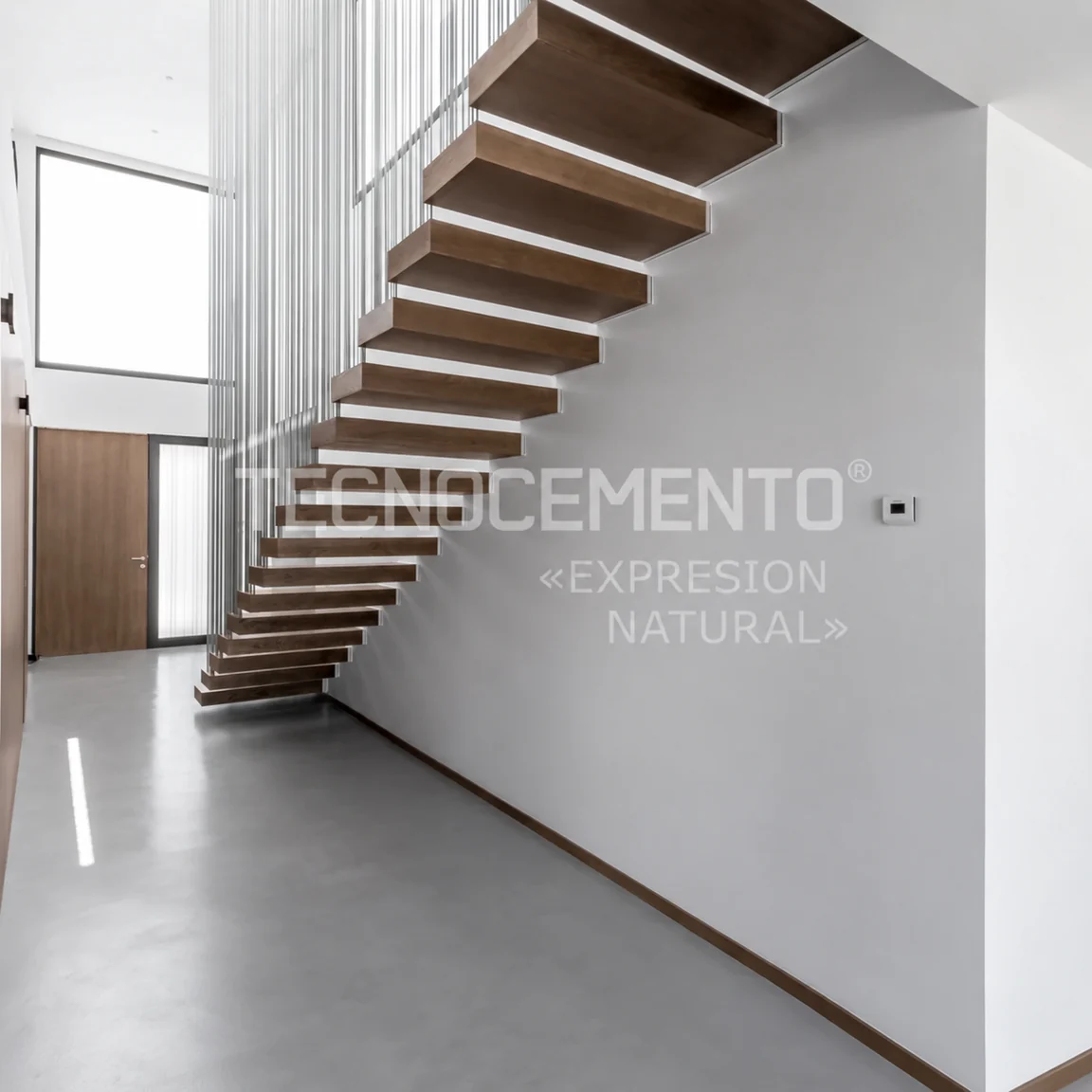
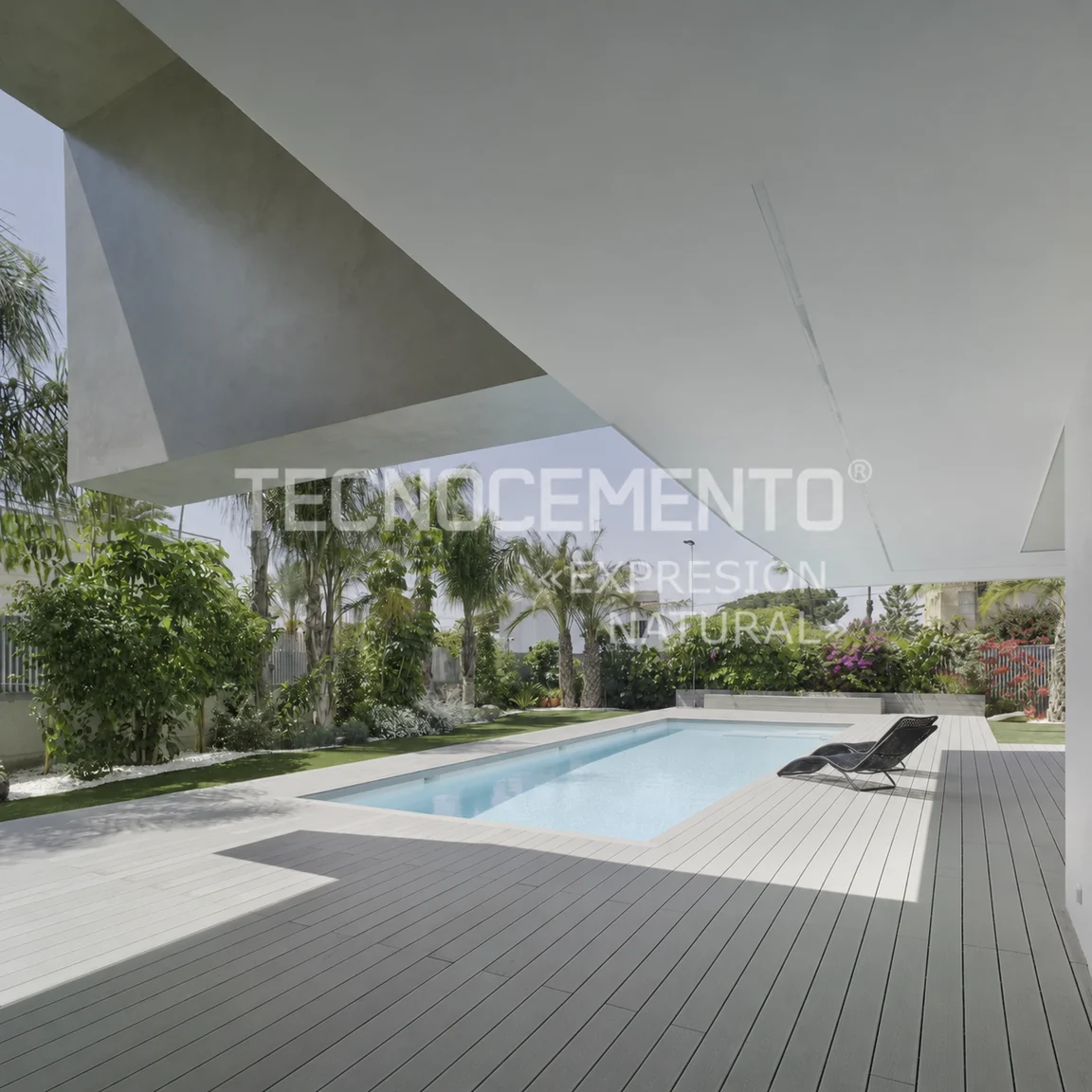
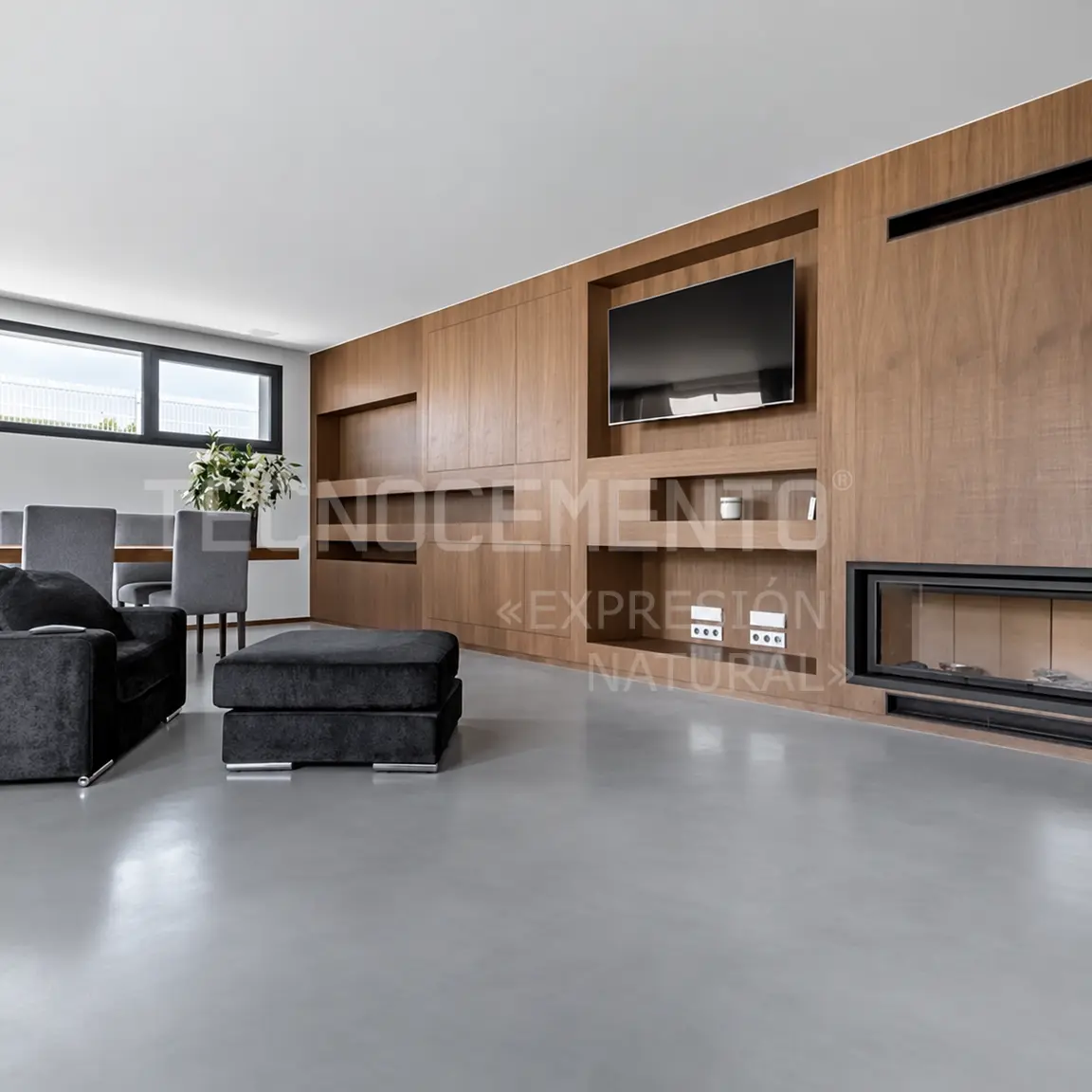
It’s used for what you see in these photographs: floors, walls, bathrooms, kitchens, stairs, outdoor areas, pools, furniture. Its value lies in continuity. A single material runs across the floor, up the wall and into the shower without a joint.
What it isn’t: it isn’t a structural material, it doesn’t level an uneven floor and it isn’t waterproof on its own. A shower needs tanking underneath and a fall of between 2% and 4%. The microcement goes over it.
Ours is two-component: a mortar and a resin that are mixed on site. Each use has its own system: TECNOCEMENTO PLUS for interior floors and walls, TECNOCEMENTO IMPER for wet areas, and six more in the full range of systems.
Two millimetres won’t fix a poor substrate. They’ll reveal it.
02 · How long does a microcement floor last?
The coating has no expiry date. The sealer does.
Anyone who quotes a lifespan without seeing the job isn’t being honest. A microcement floor has two separate lifespans.
The first is the coating itself: the two millimetres of material. If the substrate is sound and stable, it’ll last as long as the substrate. Some of our earliest floors are still in use, and it isn’t the microcement that has aged.
The second is the sealer: the clear protective coat on top that bears the wear, the spills and the chair scuffs. It wears out and needs renewing. How often depends on foot traffic and the product; each system’s maintenance guide sets this out, and an applicator can advise once they’ve seen how the floor is used.
What shortens a floor’s life, in order of how often we’ve seen it: a substrate that cracks and takes the microcement with it; moisture coming up through the substrate; a sealer that hasn’t been renewed; and installation by an untrained applicator.
The useful question isn’t ‘how many years does it last?’ but ‘what’s underneath?’
03 and 04What goes wrong and what colours it comes in.
03 · What are the disadvantages of microcement flooring?
Six things a salesperson won’t tell you on day one.
It cracks if the substrate cracks. It’s the complaint people search for most, and the most justified. Microcement doesn’t crack on its own: it follows cracks in the substrate. That’s why assessing the substrate matters more than any other part of the job, although it’s the part you see least.
It depends on who applies it. It’s a skilled trade, not an off-the-shelf product. The same material in different hands produces different floors. We train our applicators because the system doesn’t work without skilled workmanship.
It can’t be repaired invisibly. A patch repair on a seamless, hand-applied finish shows. An area can be redone, but you won’t make the whole floor look untouched again. That’s what sets it apart from a tile, which can simply be replaced.
The sealer needs maintaining. Without periodic resealing, it stains. The sealer provides water and stain resistance; microcement alone doesn’t.
It has natural variation. Tonal variation, trowel marks and clouding aren’t defects; they’re inherent in the material. If you want the uniformity of a factory-made tile, this isn’t it.
It costs more than a basic tile. We’ll come to that in the fifth question. The disadvantage is simple: installed microcement costs more per square metre than standard porcelain tiling.
All of this has to be resolved before work starts. Afterwards is too late.
Microcement in bathrooms: disadvantages and how to prevent problems
04 · What colours does microcement come in?
Fifty-seven shades on the chart. None will look the same in your home.
As at 29 September 2026, our colour chart contains 57 shades in 9 ranges: Basic Colour, Basic Grey, Spring, Summer, Autumn, Winter, Kasbah, Vintage and Metallic. Greys are requested most; earth tones and off-whites are growing fastest.
What the chart doesn’t tell you. The final colour of a microcement finish is determined by three things besides the pigment: the sealer, which darkens it and alters the sheen depending on whether it’s matt or satin; the applicator’s hand, which distributes the pigment with each pass; and the light in the room. You can’t choose from an on-screen sample. A physical sample in your home, in your light, is what works.
You don’t choose a colour from a catalogue. You choose it with a sample in your hand.

05Microcement cost per m².
05 · How much does a microcement floor cost per m²?
UK guides quote £100 to £180 per m². That range is accurate and useless.
Two UK sources, read on 20 October 2026, give the market figures. Bookabuilder puts installed microcement at £100 to £150/m² on floors and £120 to £180/m² in bathrooms and wet rooms. Homebuilding & Renovating quotes kits from £29.20/m², but that’s for materials only, before anyone has picked up a trowel. The numbers are theirs, not mine.
A range like that doesn’t help you decide. Let me explain what drives it, from a manufacturer’s point of view.
The substrate. It’s the first cost factor and the one the guides mention least. Sound tiling can be prepared in a day. Hollow-sounding tiles, cracked screed or damp walls must be dealt with first, or you’ll pay twice later.
The area and its shape. A team has to travel to site, protect the space, prepare the substrate and come back for each coat and for the sealer. That takes almost as many days for 8 m² as for 40. Spread over 8 m², the cost per square metre rises sharply.
Wet areas. A shower isn’t just another wall: it needs tanking, the correct fall and a different system. A bathroom quote at the price of a living room is a quote with something missing.
The sealer. Two quotes at the same price but with different sealers aren’t equivalent. The sealer determines how the floor performs over the next ten years.
We don’t publish our own price per square metre. It isn’t commercial coyness: any figure given without seeing the job would be wrong for half the people reading it. What I can tell you is what every quote should include if you’re to compare like with like:
- The condition of the substrate: what has been checked and which repairs are included.
- The name of the system and the sealer, area by area.
- The number of coats and the total thickness.
- The proposed shower build-up, including tanking and falls, if there is one.
- Who takes responsibility afterwards, and how quickly they respond.
A price that drops every time you call was never a price.
The sixth question is yoursTell me what lies underneath.
Anyone can answer the first five. The one that matters — what the substrate is, how the space will be used, what light it gets and what the budget is — can only be answered by inspecting the job. An installer from our network does that before giving you a figure.
More articles: all about microcement
Are you a professional? Join Tecnocemento as an applicator or distributor
+34 965 385 920
info@tecnocemento.com
Head office in Elda · Alicante, Spain
Calle Maestro Ramón Gorgé, 44 · 03600 Elda