

Microcement application
Microcement application from the living room to the garden, without changing material: where it goes in a home, and why the finish bears the signature of the person who applies it.
Where it goes, how it is applied and who applies it
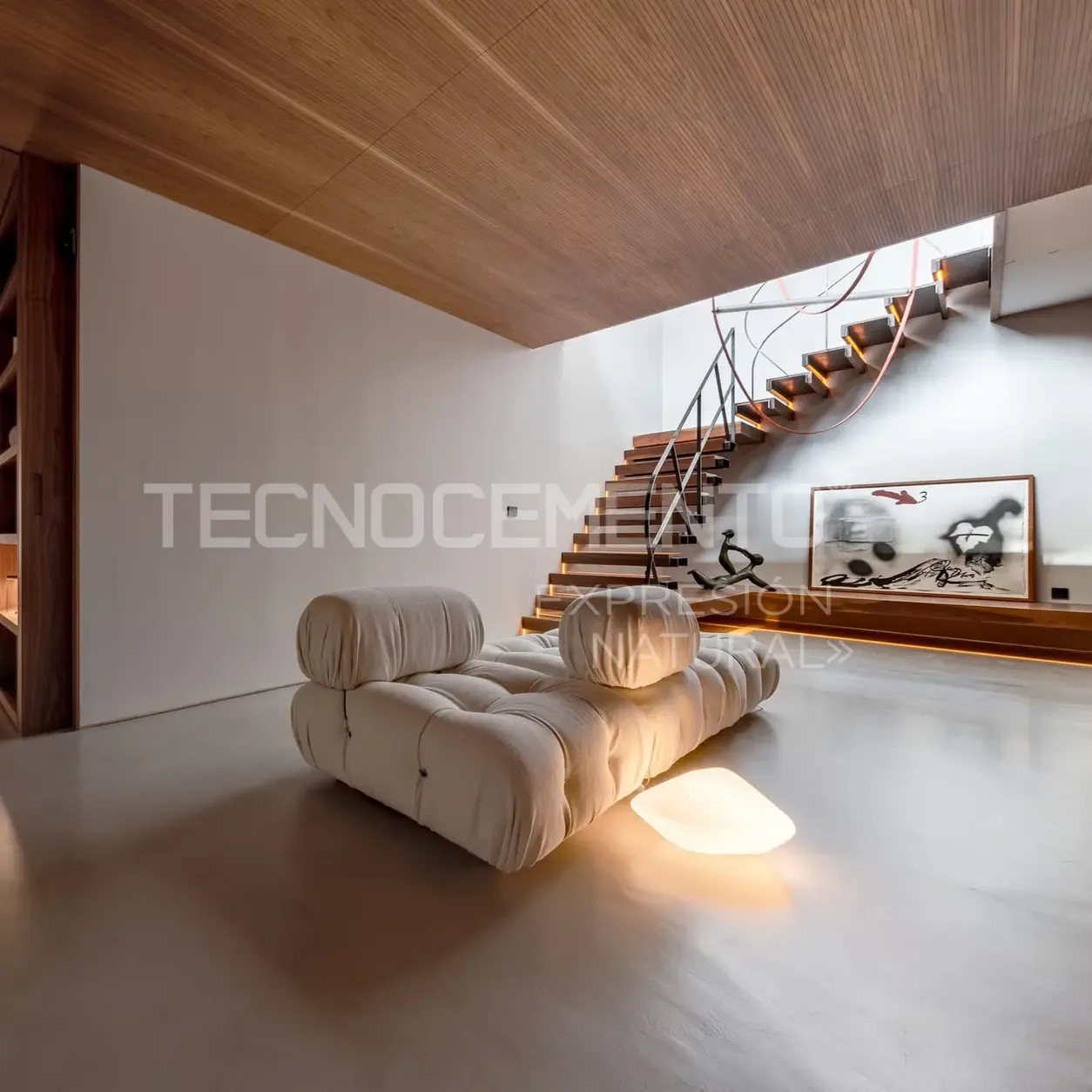
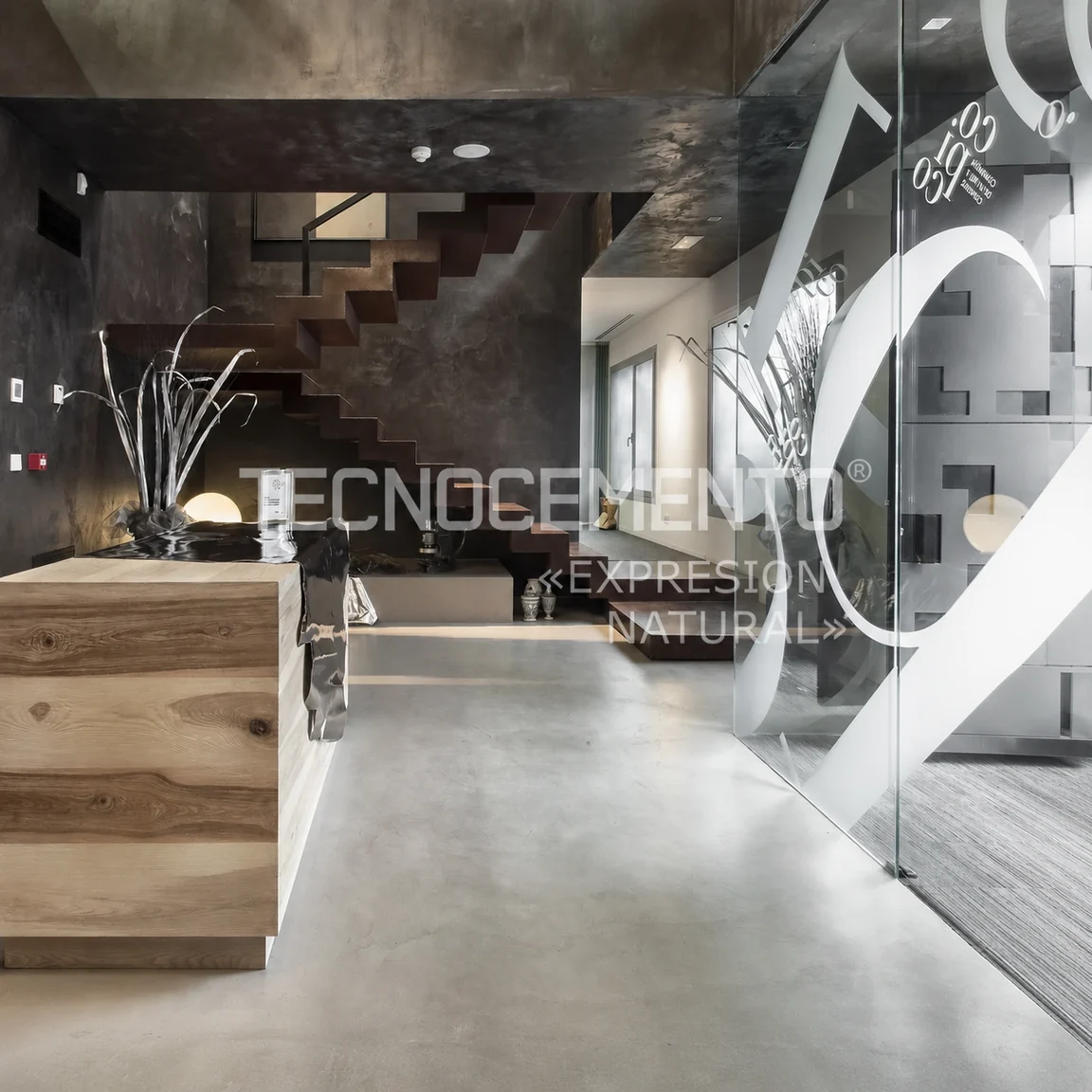
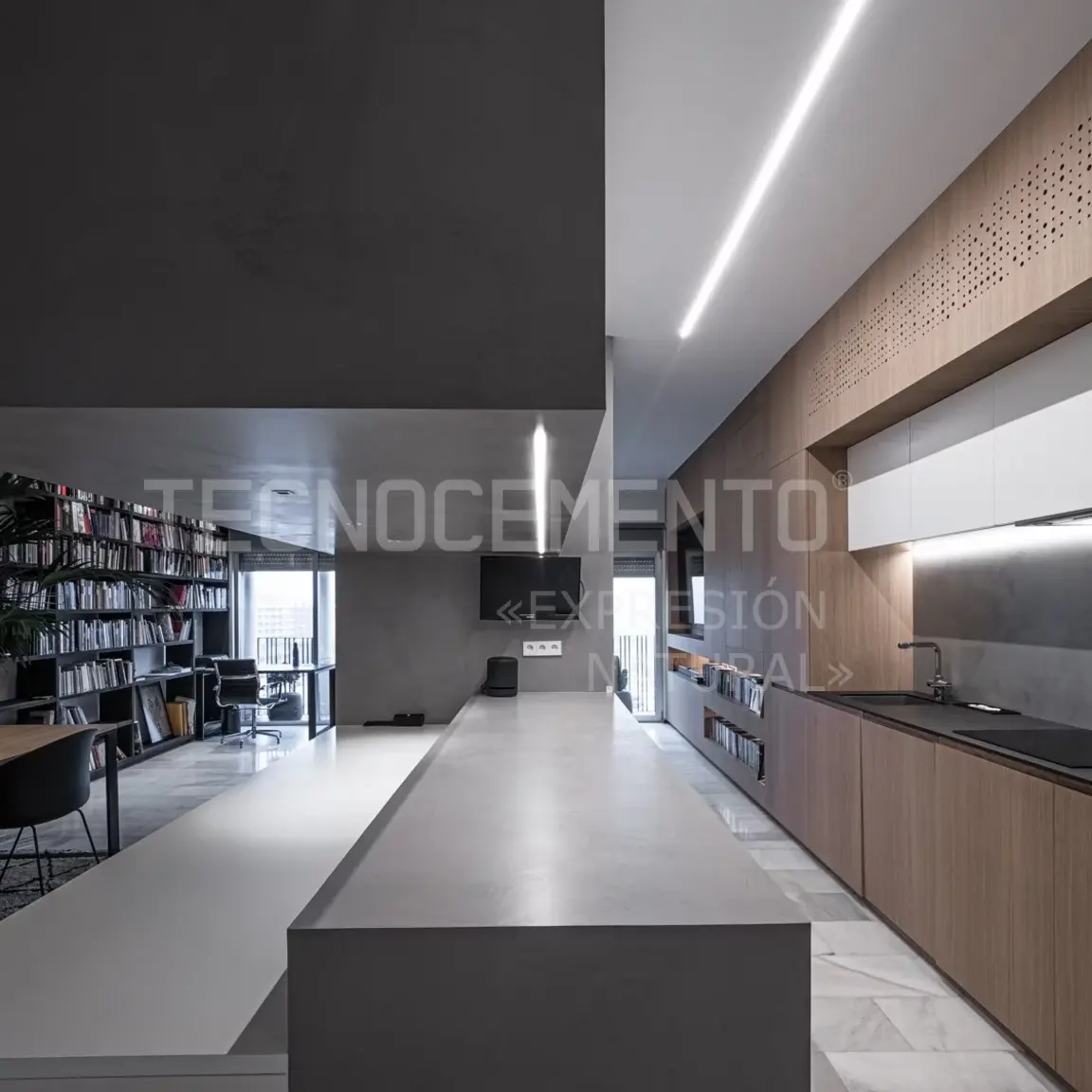
Floors
Microcement flooring
The surface where the material best expresses its strength.
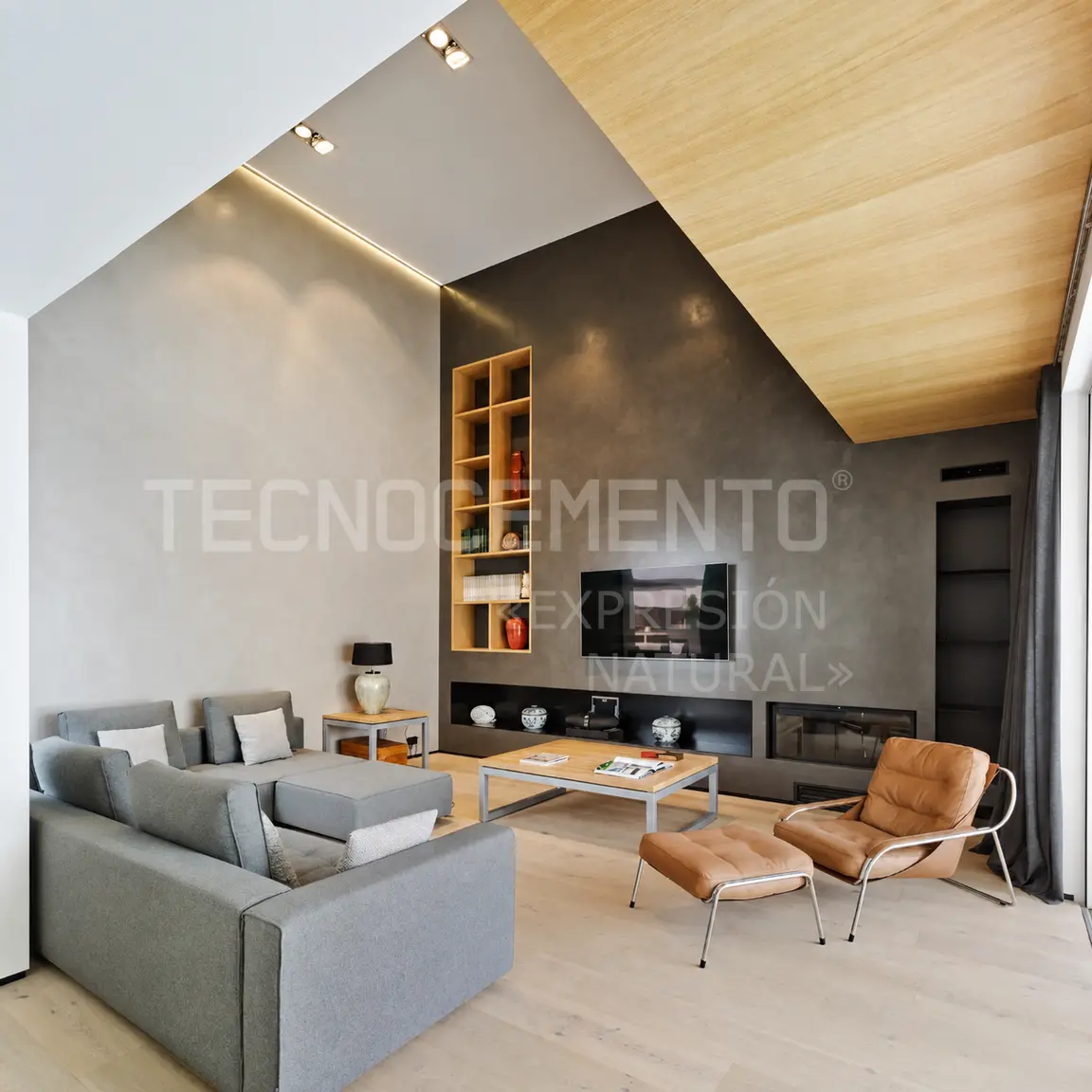
On floors, microcement shows particularly clearly its ability to create continuous, hard-wearing surfaces that carry a single material from room to room. In homes, TECNOCEMENTO PLUS® provides that continuity in a system suited to everyday use; where the floor requires much greater mechanical resistance, TECNOCEMENTO HIGH TRANSIT® withstands that more intensive use; and in country houses, refurbishments or spaces where a more industrial or rustic character is wanted, TECNOCEMENTO INDUSTRY® offers a different texture and a different character. Where we also want to alter the character of the floor deliberately, TECNOCEMENTO VINTAGE® introduces an aged patina and TECNOCEMENTO METALLIC® opens the floor up to metallic finishes.
A floor like this does not come out of the tub: it bears the signature of the hand that applied it.
Read the flooring guide ↗



Walls
Microcement walls
Where texture works with light.
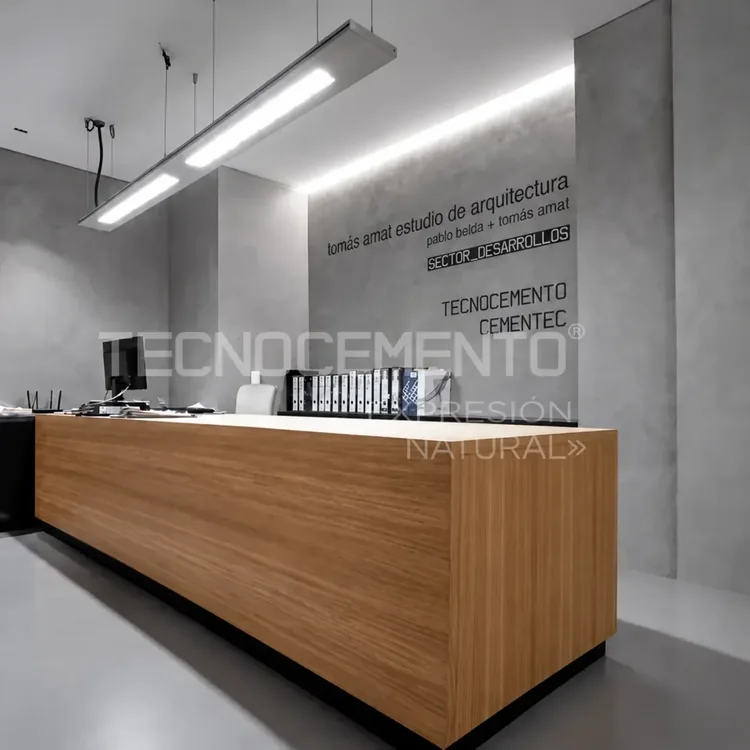
On vertical surfaces, microcement is free from the wear that floors endure and can concentrate on texture, depth and the way light travels across the surface. On very flat substrates — plaster, plasterboard, MDF and similar materials — TECNOCEMENTO HOME® is designed specifically for this kind of application and allows a very thin build-up. Where we want to alter the character of the surface deliberately, TECNOCEMENTO VINTAGE® adds an aged patina, while TECNOCEMENTO METALLIC® gives it a stronger metallic character.
Raking light is unforgiving: it shows every pass of the trowel.
Explore inspiration ↗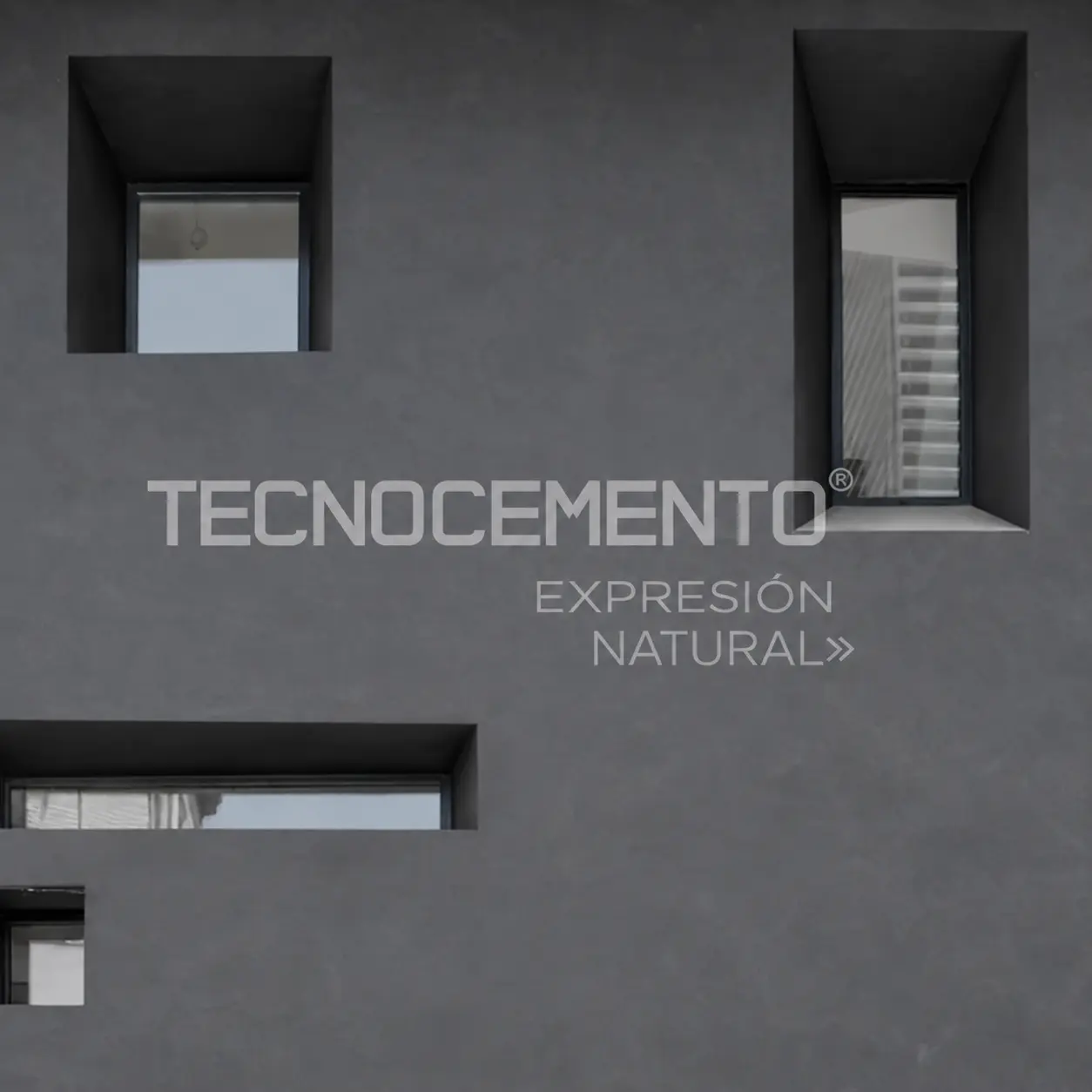


Stairs
Stairs and special elements
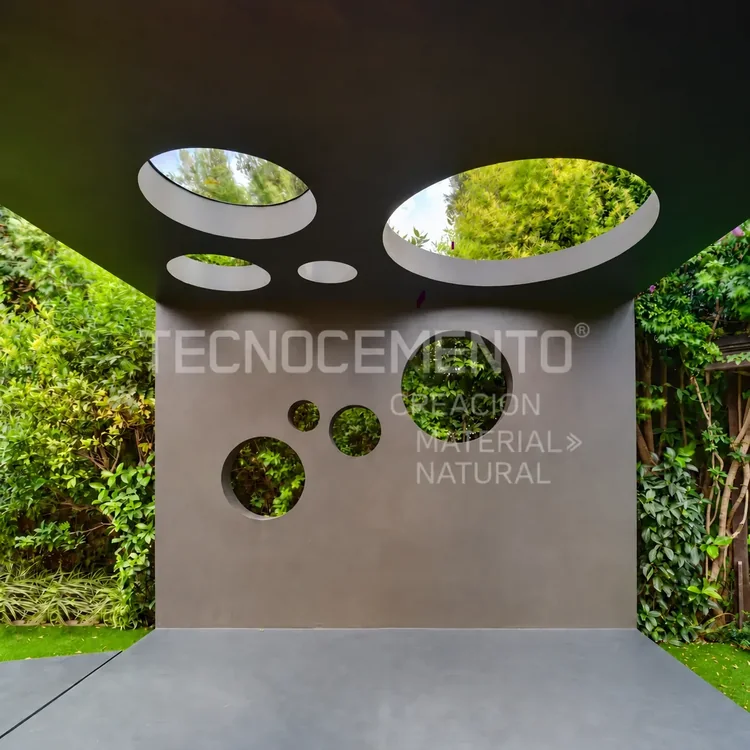
When continuity has to negotiate geometry.
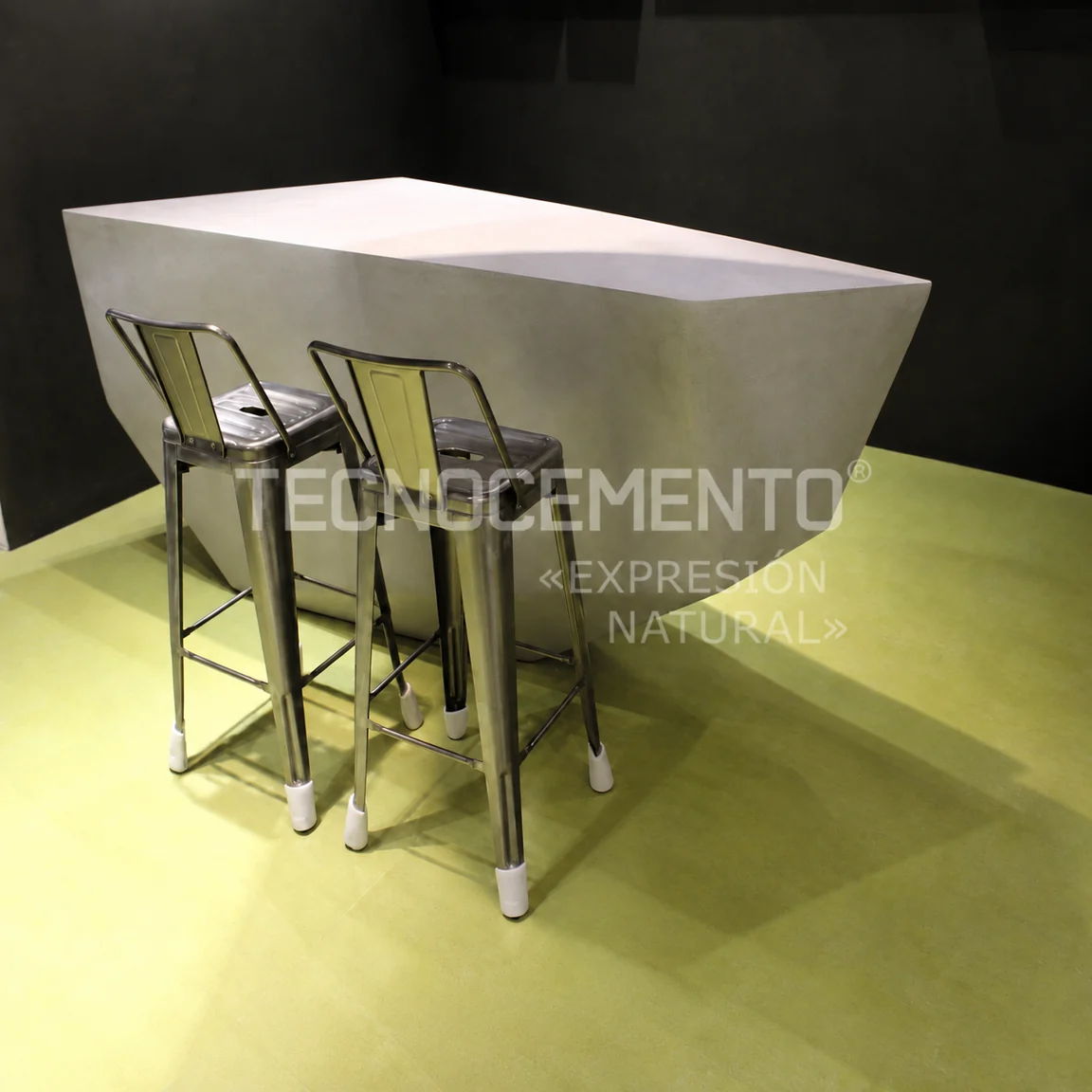
Staircases, treads, benches, counters, built forms and bespoke pieces require microcement to negotiate changes of direction, arrises and junctions. TECNOCEMENTO PLUS® is particularly versatile for this kind of application on properly prepared substrates; and where these elements are formed on very flat substrates — such as plasterboard, MDF or similar materials — TECNOCEMENTO VINTAGE® can add an aged patina and TECNOCEMENTO METALLIC® can give the piece a stronger metallic character.
Every arris is a junction that takes skill to resolve.
See furniture projects ↗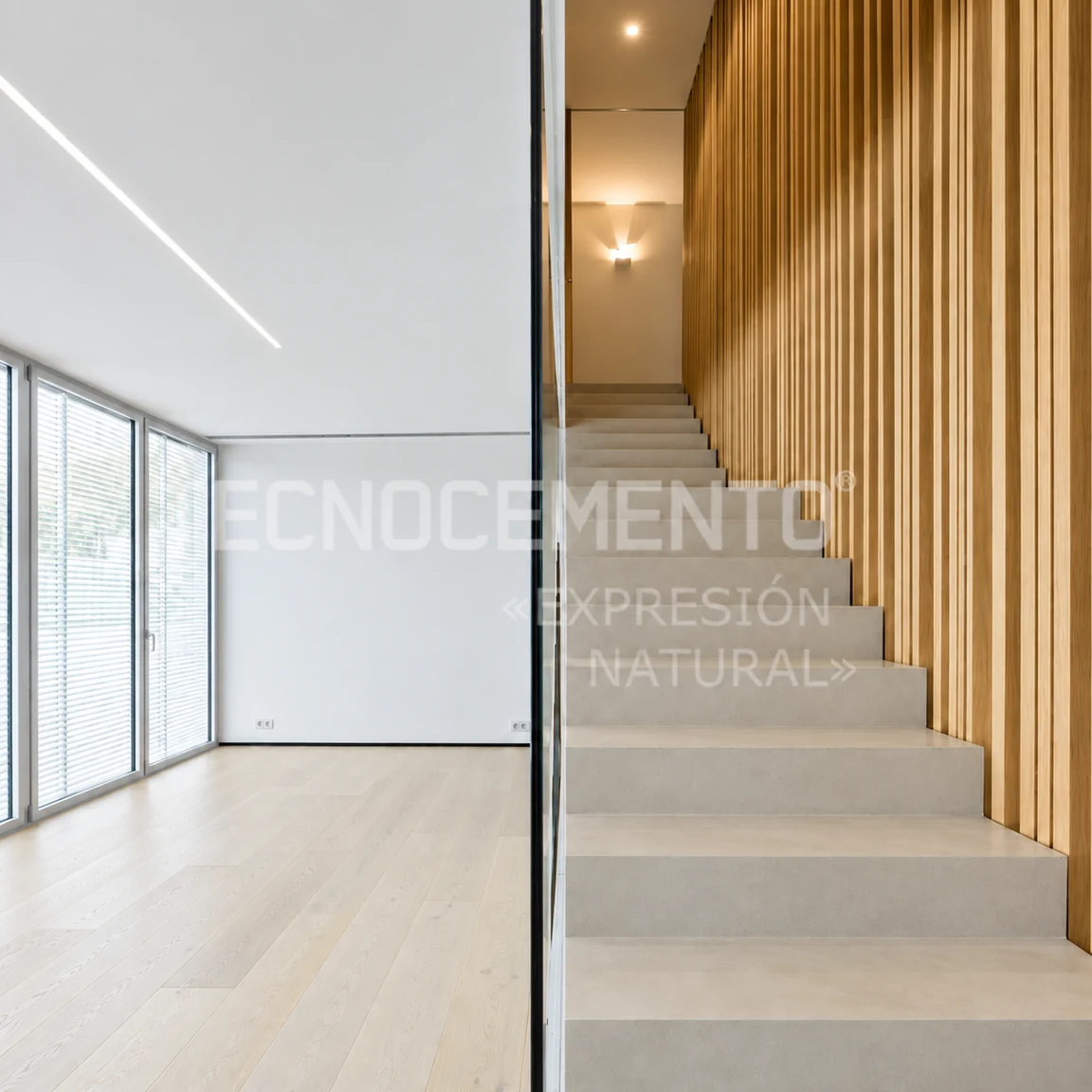

Wet areas
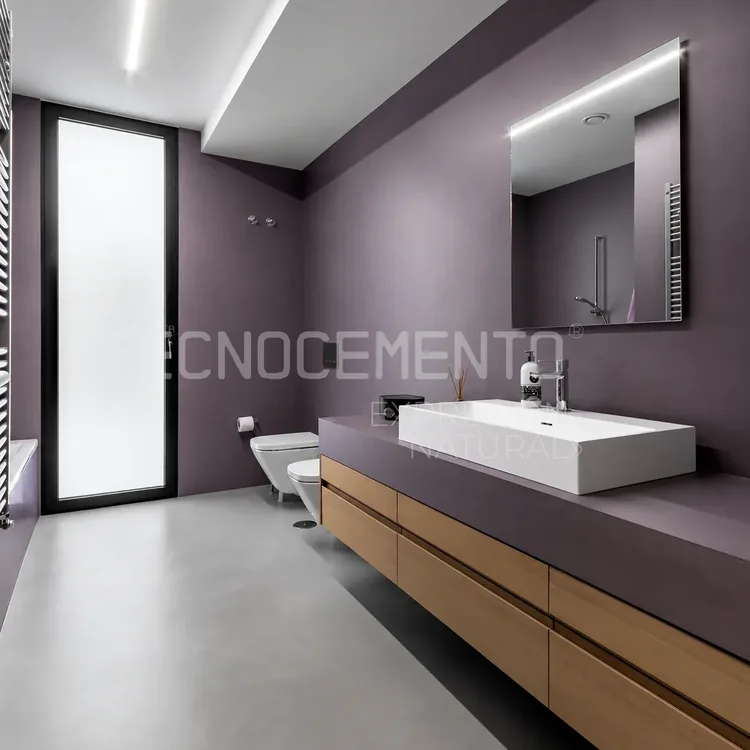
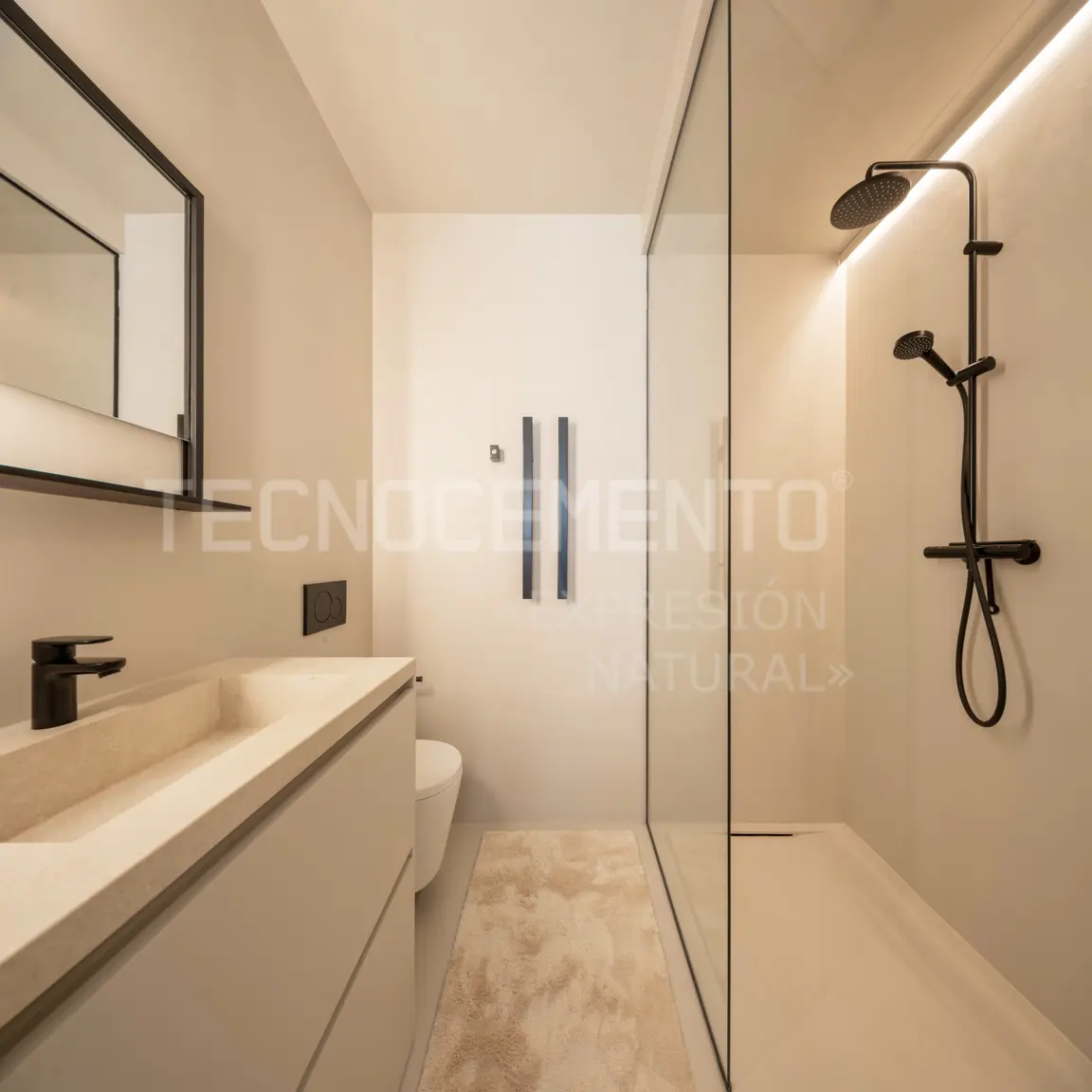
Microcement bathrooms and showers
When water enters the picture, the system changes.
Bathrooms, showers and other surfaces exposed to moisture need more than visual continuity. The substrate, the junctions, the waterproofing and the surface protection all become part of the problem. TECNOCEMENTO IMPER® is designed precisely to coat and waterproof floors and walls in these conditions, keeping a continuous surface wherever water raises the technical demands.
In a shower, what you can’t see is what counts most.
See bathroom projects ↗
Outdoors
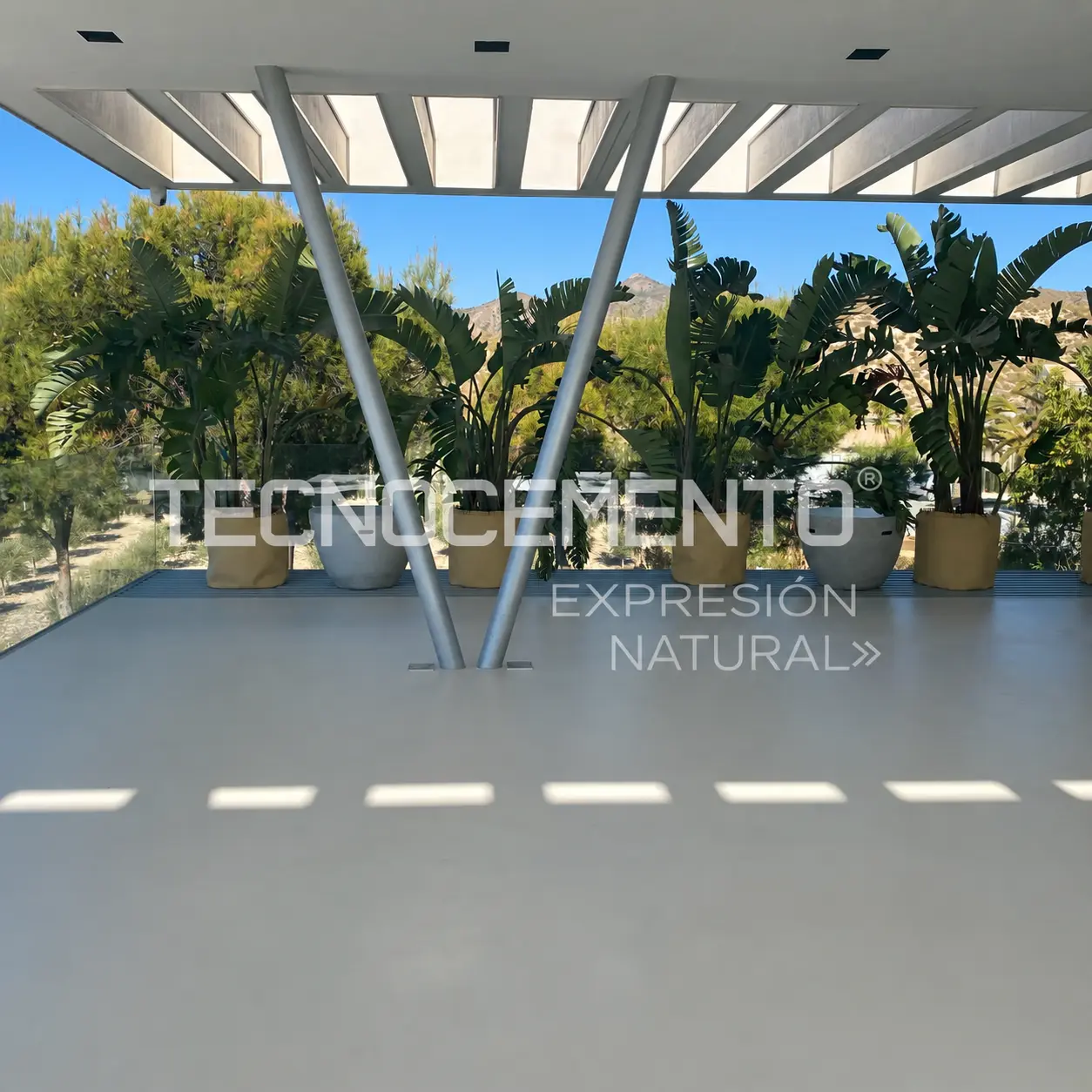
Outdoor microcement flooring
When the floor is exposed to the elements.
Outdoors, flooring faces conditions that do not occur with the same intensity indoors: solar radiation, rain, temperature changes, falls and movement in the substrate. With its more robust, industrial character, TECNOCEMENTO INDUSTRY® is particularly suitable where a continuous surface has to withstand that greater exposure. Here, preparation of the substrate, correctly formed falls and proper drainage are decisive.
Outdoors, the substrate and the falls determine how long the floor lasts.
See outdoor projects ↗






The craft
How to apply microcement
Read the transcript
How is microcement applied? Microcement is not learned from a technical sheet. It is applied in thin layers, by hand, and almost always fails in the same three places. I am Pablo Iglesias, trainer of TECNOCEMENTO®… Let me tell you in thirty seconds. The substrate. Before the first layer: you need to decipher what is underneath, how it is, and think… how to prepare it. The timing between layers is easy… Each layer works on the previous one; haste shows in the finish. Patience… What about sealing? The final protection, with FORTE PLUS, determines how the surface ages. Certainly stretching the material a lot. Not by loading more product… it will withstand more… it will turn into gum if you do it that way. Store the product in a cool, dry place, and start working early, and in summer, avoid the hours of maximum sun exposure. These tips are… part of the success!
You don’t learn microcement from a data sheet. It goes on in thin coats, by hand, and it nearly always fails in the same three places. Pablo Iglesias, trainer at TECNOCEMENTO®, explains it in a minute.
- The substrateBefore the first coat: what lies beneath, its condition and how it should be prepared.
- Timing between coatsEach coat works on the one before; rushing shows in the finish.
- SealingThe final protection, with FORTE PLUS®, determines how the surface ages.
Who applies it
Behind every surface is a trained hand
The result of a microcement application does not depend on the product alone. That is why we train the people who apply it before we sell them anything, and stand beside them on their first real job.
40%substrate
40%applicator
20%product
We have run more than 60 microcement courses. Once their first job has been certified, each applicator receives a 1.5 cm² stamp bearing their initials to sign their work.

Frequently asked questions
Questions about applying microcement
How is microcement applied to walls?
In thin coats and by hand, over a clean, stable and properly prepared substrate. On plaster, plasterboard or MDF, TECNOCEMENTO HOME® allows a very thin build-up. Full step-by-step instructions are in our application guide.
Can microcement be applied to both the walls and floors of a home?
Yes. Each surface has its own system: TECNOCEMENTO PLUS® for domestic floors, TECNOCEMENTO HIGH TRANSIT® for heavily trafficked floors and TECNOCEMENTO HOME® for flat, even wall substrates.
How much does it cost to apply microcement?
It depends on the substrate, the system, the area and the applicator. Tell us what lies beneath and how the surface will be used, and we will put you in touch with an applicator in your area.
Can microcement be applied over tiles?
Yes, after filling the grout joints and applying a primer. Over timber flooring or floating floors, no: the wood moves and the coating cracks.
Who can apply TECNOCEMENTO® microcement?
A trained applicator. We run the course in Elda and stay with each applicator on their first real job until it is certified.
Why does the result depend more on the applicator than on the product?
Because with microcement, 40% of the result depends on the substrate, another 40% on the applicator and 20% on the product.
Planning a project or want to learn the craft?
Tell us what lies beneath and how it will be used: we will tell you which system to choose and who can apply it in your area. And if you are a professional, start with the course.
More: colours · technical data sheets