MICROCEMENT · COST PER M²
Microcement cost per m²: why UK guides say £100 to £250, and what that figure doesn’t tell you
UK guides put the microcement cost per m², installed, at £100 to £250. That isn’t a price range. It’s a ratio of one to two and a half, and it doesn’t help you decide.
I’m Tomás Amat, an architect and a microcement manufacturer since 2009. I’m not going to add another figure to the list. I’ll explain why the ones already out there contradict each other, what each of them really measures, and how to read a quote so you know what you’re buying.
Tomás Amat
Architect and CEO · TECNOCEMENTO®
Let’s start with what the guides say.
How much does microcement cost per m² in 2026?
Here’s what three UK guides say about microcement cost per m², checked on 29 October 2026. The numbers are theirs, not mine.
| Source | What it publishes |
|---|---|
| Checkatrade | Microcement in a bathroom: £100 to £250 per m². New bathroom cost guide, last updated March 2026. |
| Bookabuilder | Floors: £100 to £150 per m². Bathrooms and wet rooms, waterproofing and detailing included: £120 to £180 per m². Minimum labour charge: usually £1,500 to £2,500. Article dated 25 March 2026. |
| Homebuilding & Renovating | Floor, quality product and installation: around £140 to £160 per m² plus VAT. DIY kits from £27.50 per m². Article dated 7 September 2024. |
Checkatrade’s top figure is two and a half times its bottom one. Homebuilding & Renovating quotes £140 to £160 for an installed floor, excluding VAT, and lists materials-only kits from £27.50 in the same article. Bookabuilder warns of a minimum labour charge of £1,500: on a 6 m² floor, that minimum alone works out at £250 per m², above its own bathroom range. Nobody’s lying. They’re not measuring the same thing.
Why do the guides give such different figures?
For three reasons, and none of them is spelt out prominently on the page.
They’re not talking about the same product. A kit sold online, a system a few millimetres thick applied by a professional and a poured self-levelling screed are three materials, three trades and three thicknesses. Putting them under one word, “microcement”, gives a range in which the top end is two and a half times the bottom. Homebuilding & Renovating shows it in a single article: £27.50 per m² for a kit, £140 to £160 for an installed floor.
They don’t count the same work. A microcement cost per m² can describe the finish alone, or the finish plus substrate preparation, tanking under the shower, skirting, the threshold and the final sealer. The first figure looks better. The second is the one you’ll pay. Bookabuilder, for example, lists preparation costs that can come on top: levelling at £15 to £40 per m², crack repair at £10 to £25, tanking for wet rooms at £40 to £80. Check whether VAT is included, too.
They’re not talking about the same area. The type of surface and the total area have the greatest effect on the price. The reason is simple. A team travels to site, protects, prepares and comes back for each coat and for the sealer. The number of working days is almost the same for 6 m² as for 30 m². Spread over 6 m², they weigh heavily.
An average microcement cost per m² adds up these three differences and turns them into one number. That number is accurate and useless.
What really drives the microcement cost per m²?
In order of impact on a real job.
The condition of the substrate. It’s the first cost item and the one the guides quantify least. Sound tiling can be prepared in a day. A tile that sounds hollow, an old cracked floor or a damp wall needs repairing before any finish. Our coating is 2 to 3 mm thick: it hides nothing, it shows everything. What the substrate needs is paid for beforehand, or paid for twice afterwards.
The area and its shape. The fewer square metres there are, the more each one costs. And a square metre of wall behind a wall-hung toilet, with three corners and two pipe runs, doesn’t take the same time as a square metre in the middle of a living room.
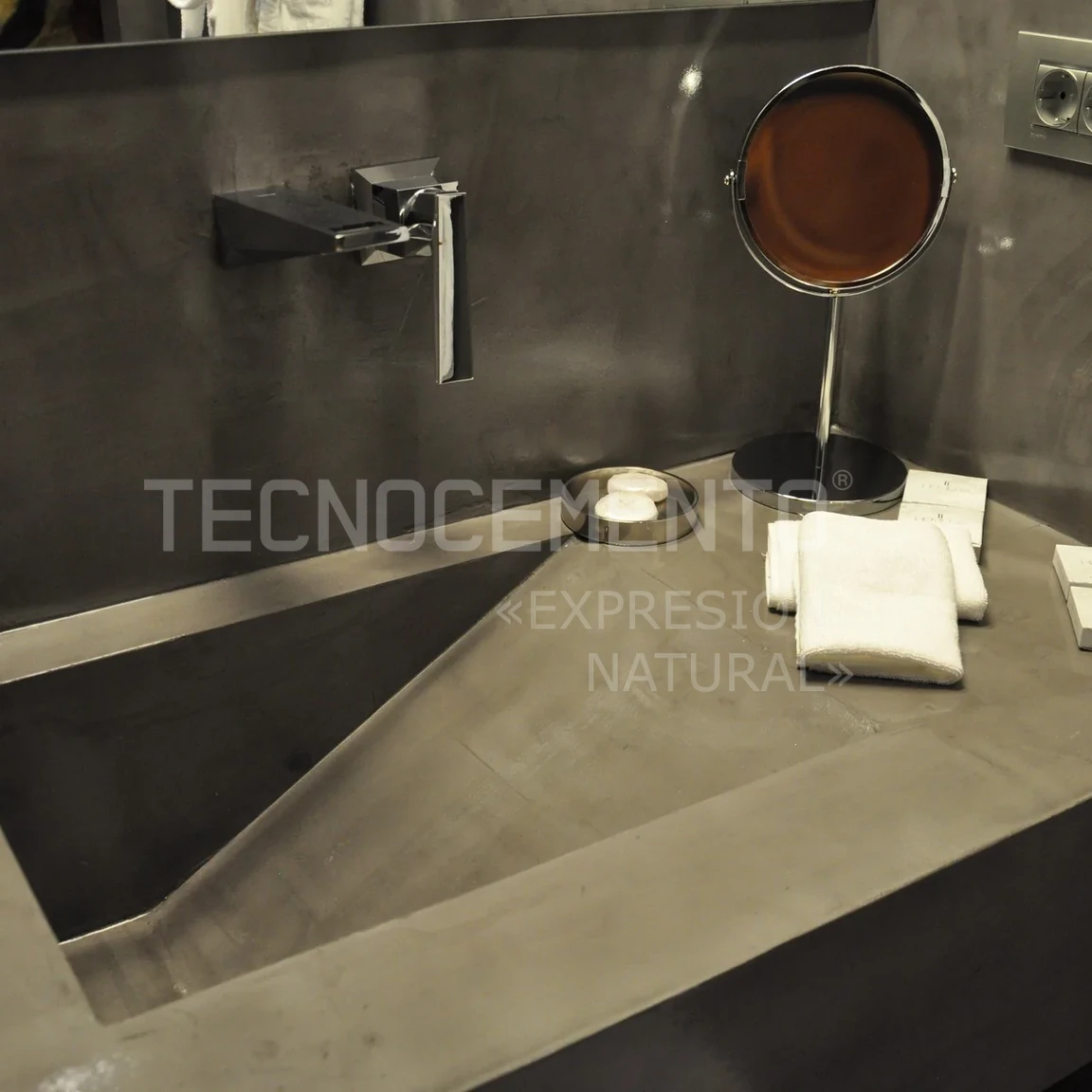
Wet areas. A shower isn’t a wall. In our system, the dry area is done with TECNOCEMENTO PLUS® and the wet area with TECNOCEMENTO IMPER®, because standing water and splashes don’t call for the same system. Under the shower there’s also tanking to install and a fall of between 2% and 4% to check. No microcement is waterproof on its own. A bathroom quote that doesn’t mention it is cheaper because something’s missing.
The detailing. Door threshold, the base of the sanitaryware, the junction with the next room, shower screen, corners, taps. That’s where the hours go, and that’s where a job turns out well or badly.
The final protection. The sealer determines stain resistance and maintenance requirements over the next ten years. Two quotes at the same price with two different sealers don’t have the same price.
How much does a microcement bathroom cost?
A bathroom brings together everything that pushes up the cost per m²: a small area, a lot of detailing, two zones that don’t take the same system and, often, existing tiling that has to be checked before it’s covered.
That’s why Bookabuilder puts bathrooms and wet rooms at £120 to £180 per m², above a microcement floor at £100 to £150, and why Checkatrade’s bathroom range goes up to £250. A wet room goes further: the whole floor is a shower, so the whole floor is tanked, and Bookabuilder also lists tanking for wet rooms under preparation costs, at £40 to £80 per m². If you’re quoted a microcement price per m² for a whole bathroom that matches that of a living-room floor, ask what’s been taken out of the quote.
Is microcement cheaper than tiling? Per m², usually not. Bookabuilder’s own comparison puts tiles at £50 to £120 per m² and microcement at £100 to £180. If a quote says otherwise, check whether both include the same preparation. And if you’re weighing it against porcelain that imitates microcement, I’ve compared the two in my article on microcement tiles.
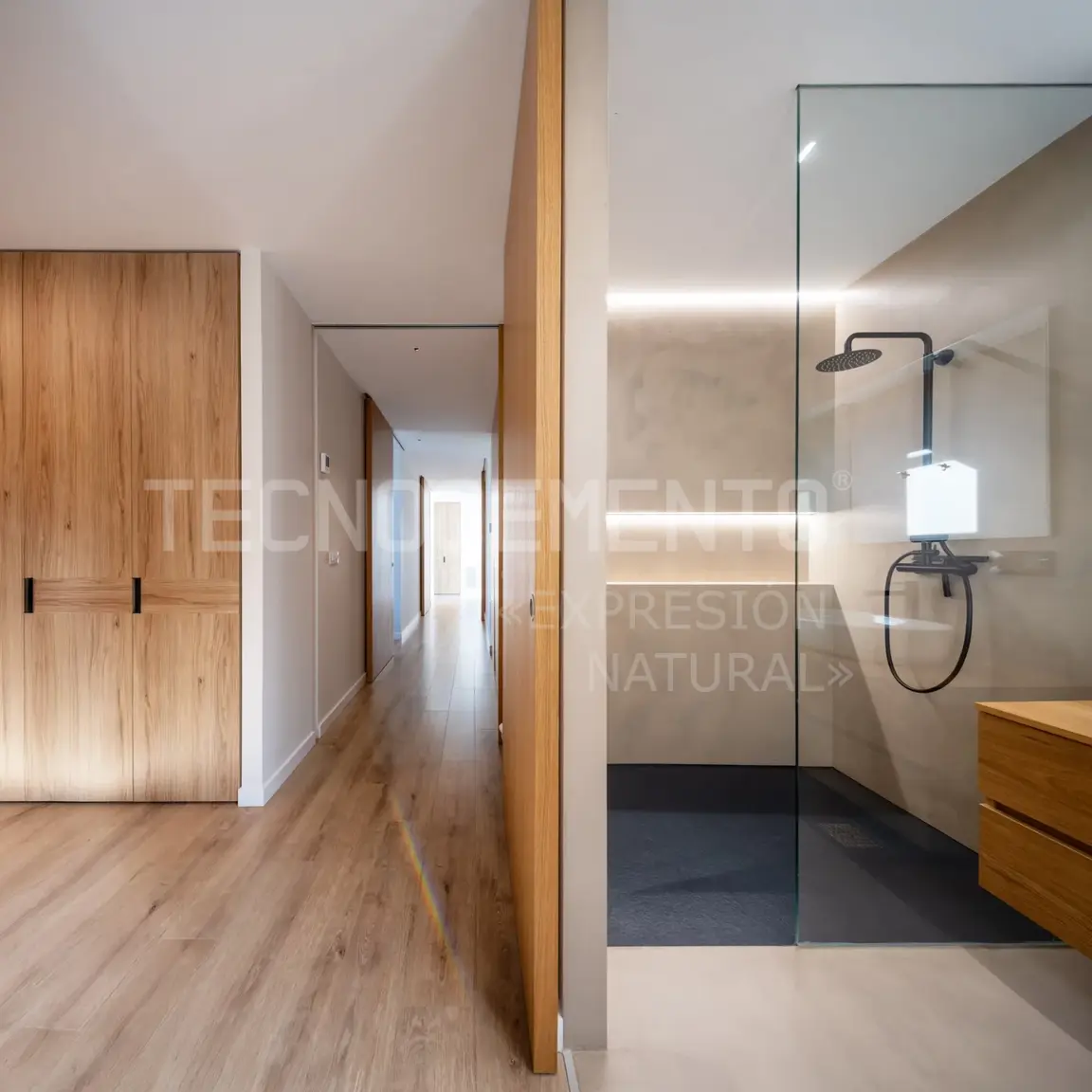
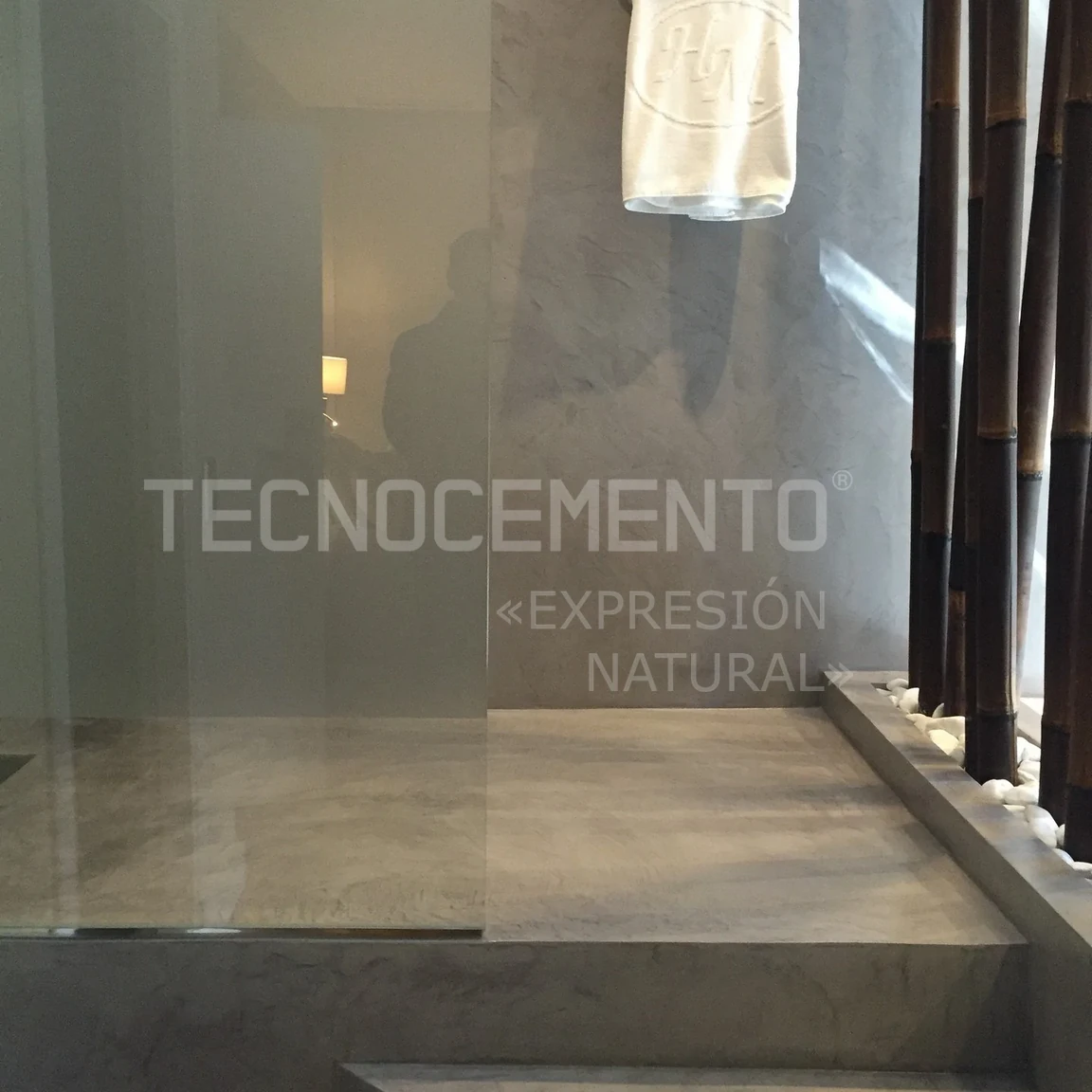
If your bathroom is tiled, I’ve explained what can go wrong and how to avoid it in microcement bathroom disadvantages. And to see the result before talking money, our microcement bathroom gallery features 61 photographs of real projects.
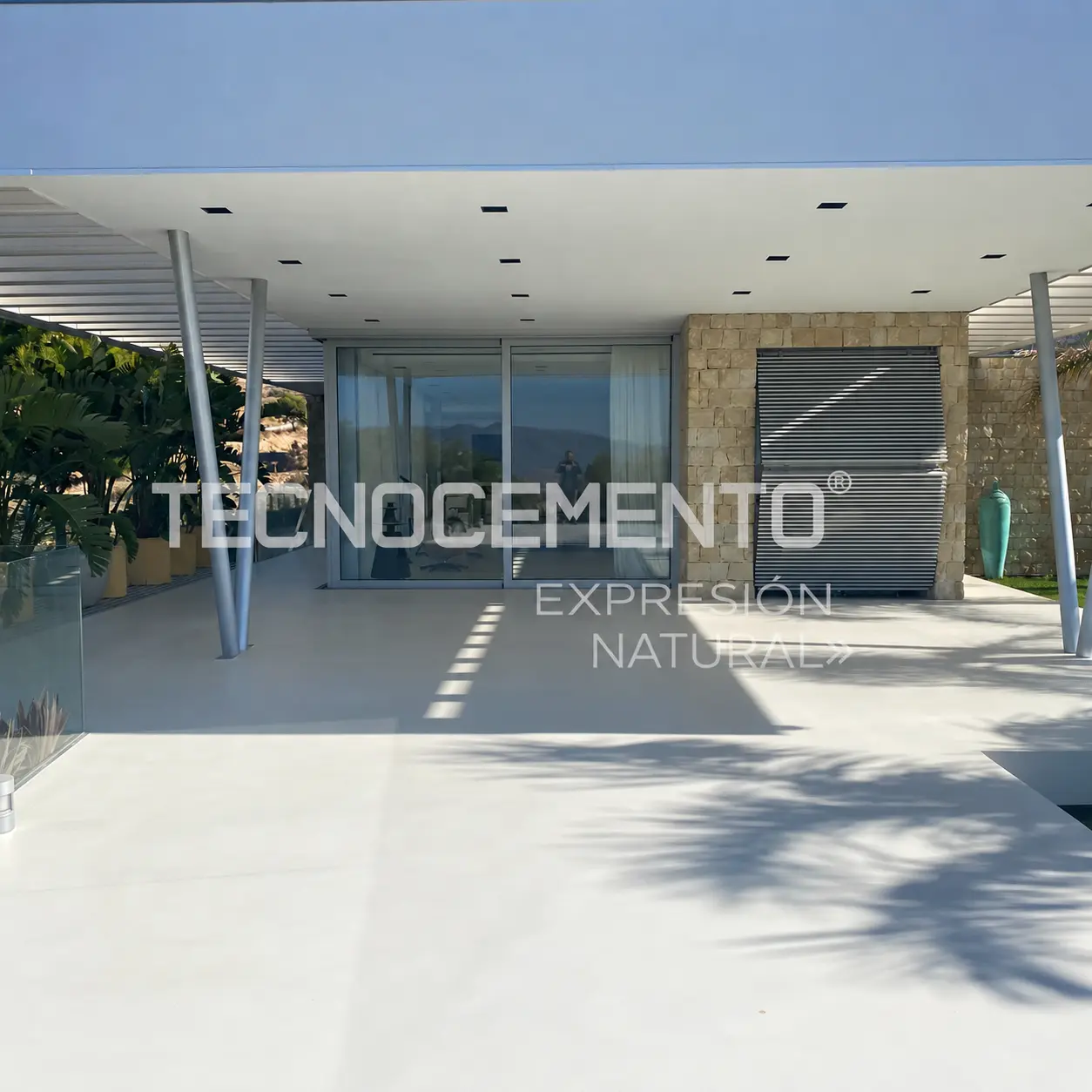
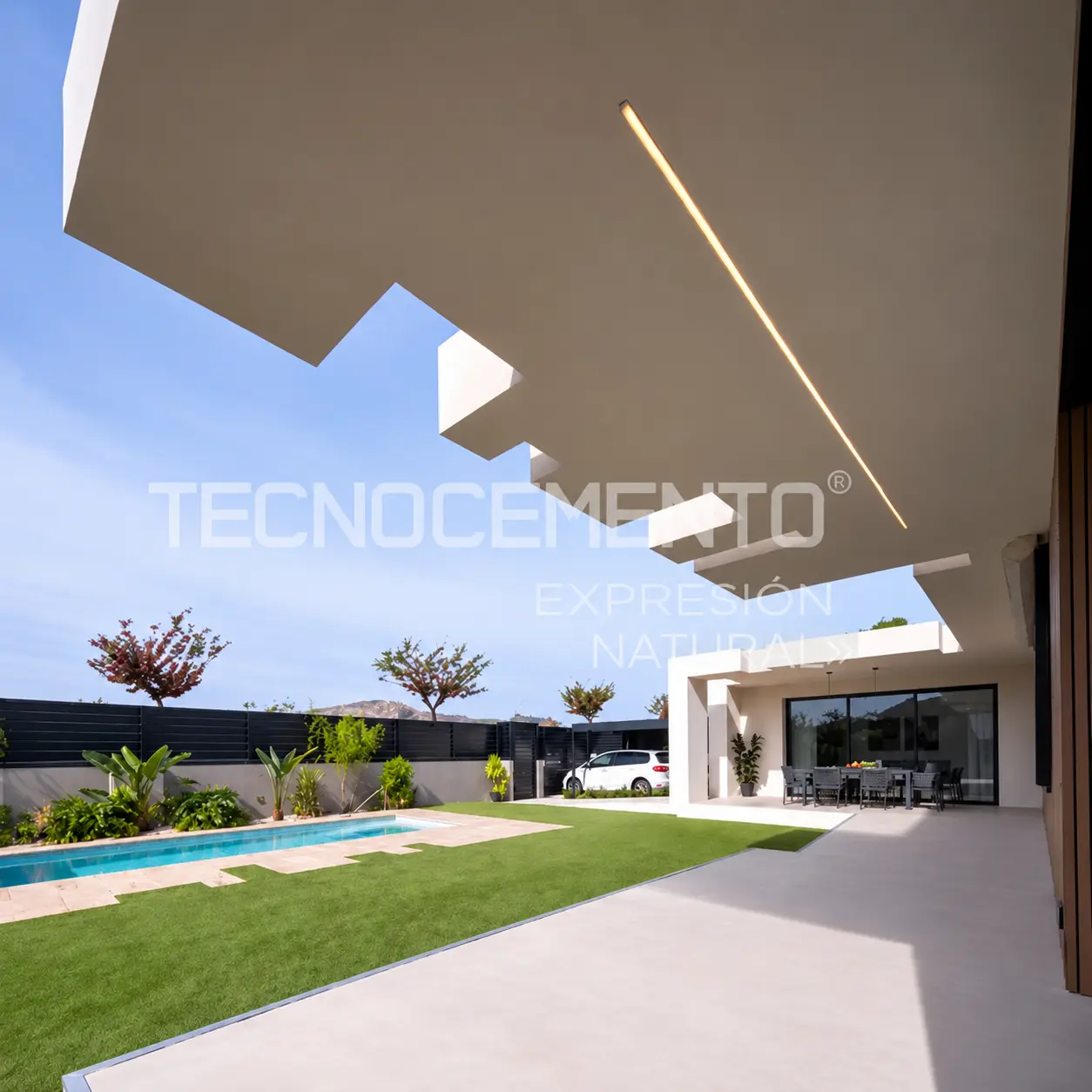
Outdoors, the price depends on the same items, plus two more: the falls in the substrate and the protection applied to sun-exposed surfaces. The guide to outdoor microcement explains them and shows the result.
What goes into a quote you can compare?
Five lines. When they’re there, two quotes can be compared. When they’re missing, you’re comparing two numbers.
- The substrate assessment: what has been checked, what is kept, what is repaired and at what price.
- The name of the system and the sealer, area by area. “Microcement” isn’t a product name.
- The number of coats and the total thickness, preparation included.
- The shower build-up: tanking under the coating, measured fall, junctions.
- What happens afterwards: time before use, care and maintenance instructions, and who answers if something goes wrong.
A dearer quote that covers all five lines is almost always cheaper, three years on, than one that covers only two.
Why we don’t publish a microcement cost per m²
Because I don’t know your substrate, and anyone who gives you a price without having seen it doesn’t know it either.
We manufacture systems and train the applicators who install them. The price of your job depends on what the applicator finds in your home: the substrate, the area, the wet areas, the details. A figure published here would be wrong for half the people reading it, too high for some and too low for others, and its main purpose would be to draw you in.
There’s one thing I distrust more than a high price: a price that drops with every phone call. If it can still come down, it wasn’t based on anything, or something has just been left out of the quote without anyone telling you. A serious price can be explained line by line. We talk about it plainly in Let’s talk frankly.
The quickest way to get a real figure is to show your project to someone who knows the system: find a TECNOCEMENTO® distributor in England.
A good microcement price is neither the lowest nor the highest on the list. It’s the one where you know what it contains. Between £100 and £250, the difference isn’t a margin: it’s a substrate that’s been prepared or not, a shower that’s been tanked or not, and someone who comes back, or doesn’t, when you call.